
The reverse protects whoever stands under a closing door. Never hold the button down to push past it, and never disconnect a sensor.
Service · Pawtucket, RI
Garage Door Reverses Before Closing in Pawtucket, RI
Your garage door comes down, touches or nears the floor and then reverses before closing: the opener's safety stop is firing on a blocked beam, a bad down limit, a force setting that sits too low or a door that binds. Call about the reversing door in your Pawtucket garage before you leave it open each evening.
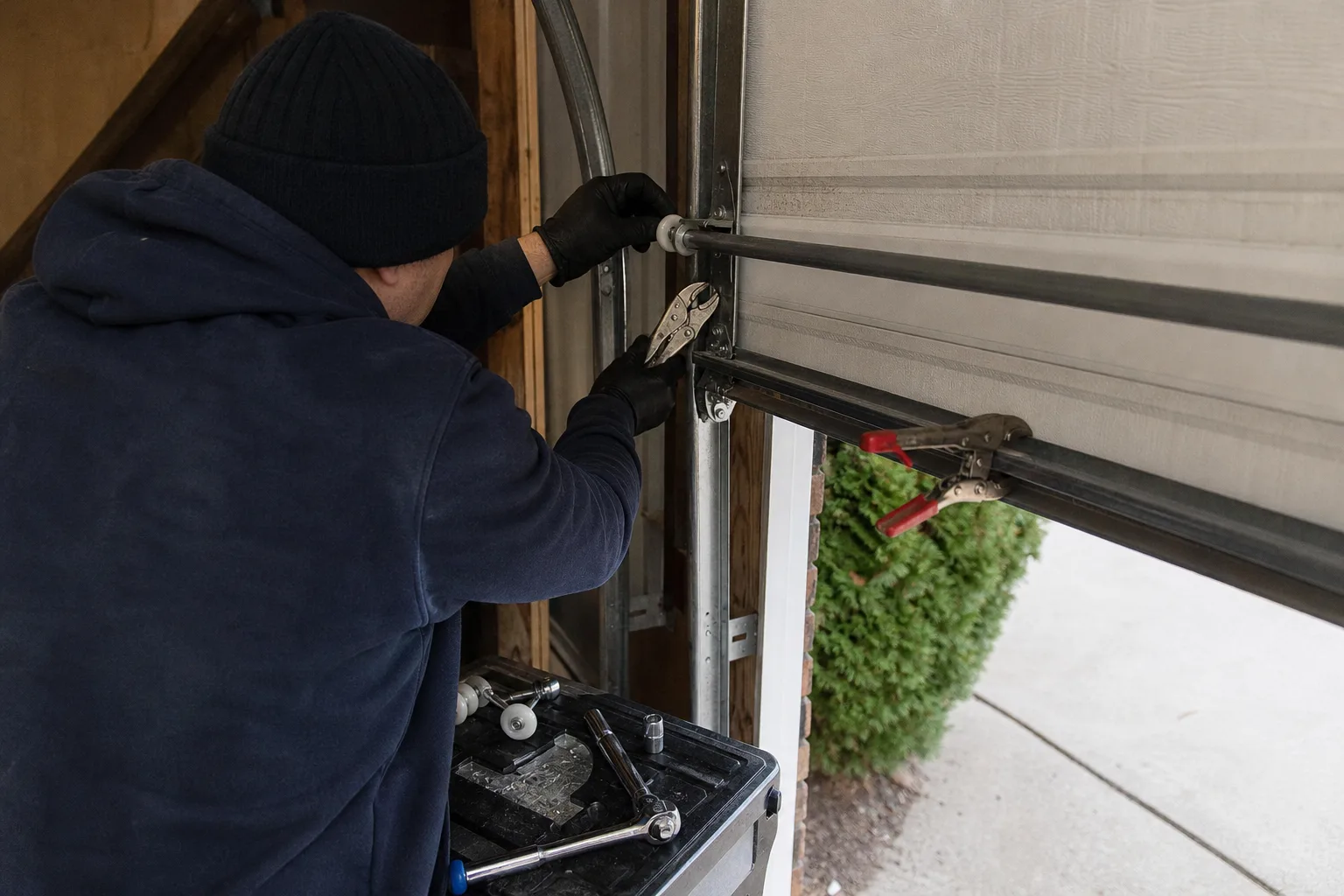
What you are seeing
The bounce at the bottom
You press close, your door lowers, then it touches or nears the floor and climbs back as though something blocked it. The spot where the bounce happens narrows the cause.
- Reverses above the slab
A hand's width up usually means a sensor beam or a limit.
- Reverses on contact
The door touches the floor and rebounds, which points at the down limit or the force setting.
- Reverses partway down
A snag in the rails or a balance fault pushes the force reading over the limit.
Property type
Readings that trigger the reverse
The opener watches three signals on the way down: the beam between the two sensor eyes, the travel the door has covered and the effort the motor spends. A false reading on any one of them triggers the reverse.
- Signal flicker
The link between the two units breaks for an instant, and the reverse fires.
- Floor set too high
The limit tells the opener the door reached the slab before it did.
- Effort spike
A stiff roller or a heavy corner pushes the motor's effort past the preset force.
Safety protocol
Leave the safeties alone
Never hold the button to push past the reverse; call about the bounce.
(401) 356-3812Loss risk
A door that keeps reversing
A door that keeps reversing stays up after dark, and your opener strains against the same fault on every try.
A workaround that defeats the reverse leaves the next person or object under the door with no protection.
Each aborted close puts a start-stop cycle through the opener's board and drive, which wears them faster than a normal close.
Local detail
A garage that will not stay shut
A door that keeps reversing leaves your garage open after dark, and the temptation is to defeat the reverse. A bypassed reverse leaves whoever stands under the door with no protection, so the call comes before any workaround.
Repair scope
Tracing the bounce to its trigger
Diagnosis treats the bounce as a reading that came out wrong somewhere in the closing stroke.
- Force preset
A preset that sits too low reads the weight of a normal close as an obstacle.
- Down stop
The stop setting tells the opener where the slab is, and one set too high triggers the bounce.
- Sensor pair
Alignment and cabling of the two units show whether the reading flickers.
- Door weight
A door heavy on one side pushes the motor's effort past its preset.
A door that stops and stays up instead is a garage door not closing fault with causes of its own.
Service sequence
Proving the close afterward
Bounce observed
The door runs several closes while the point of reversal gets noted.
Reading found
Presets, stops, sensors and door weight get checked in turn until one trips the reverse.
Setting corrected
The reading that came out wrong returns to spec and the others get confirmed.
Obstruction test
The reverse stops the door on a test obstruction, and a clean close follows.
Triage order
Why a reversing door gets harder to fix
Each failed close wears your opener, and a bypass is what anyone fed up with the bounce reaches for. Call while the cause is one sensor, one limit or one setting, because a reversing door in a Providence County garage has the same short list of suspects.
Service area
Pawtucket ZIP codes
- 02860
- 02861
Every responding technician is independent. Before work begins, confirm the technician's license, insurance and pricing with them directly.
Common questions
Doors that bounce back in Pawtucket
Why does my door go back up when nothing is in the way?
Your opener reads a blocked beam, a limit that sits above the floor or a force reading that came in too high. Each of them looks like an obstruction to the reverse.
Can you turn the reverse off?
No. The reverse stops a closing door on a person or an object, and a door without it cannot protect either.
Does a reversing door mean the opener is failing?
Often not. The sensors, the limits, the force setting or a door out of balance trip the reverse long before the opener itself wears out.
Can something on the floor cause a bounce?
Frost, a lump of debris or a stiff bottom seal can read as an obstruction on contact, and the door climbs back with nothing in its path.
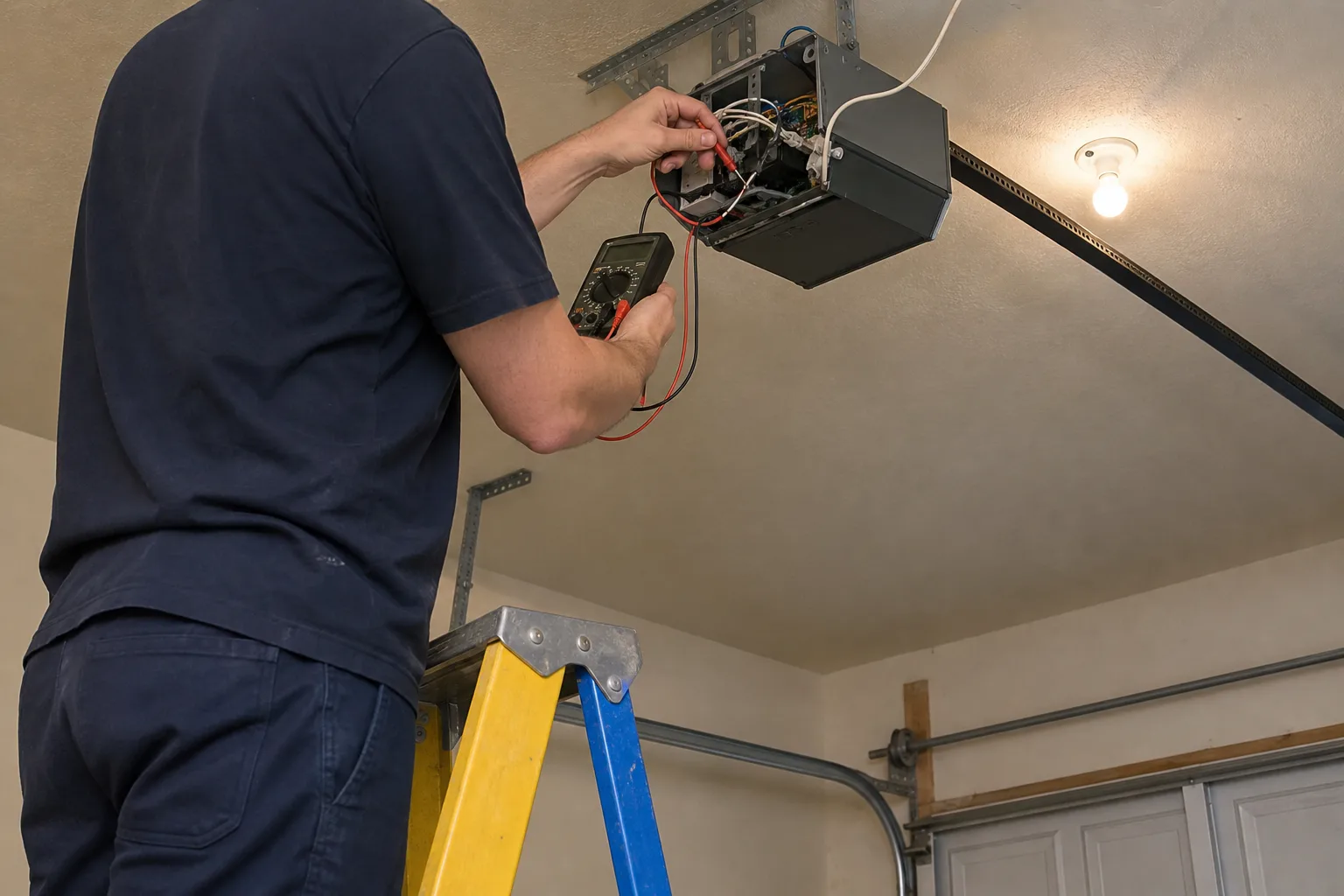
A door held by a broken spring is a door waiting to drop.
Call from Pawtucket before a broken spring or cable strips the opener or bends the sections.